MedVault On-Premise Clinic &
Hospital Management For Trust-
Critical Care
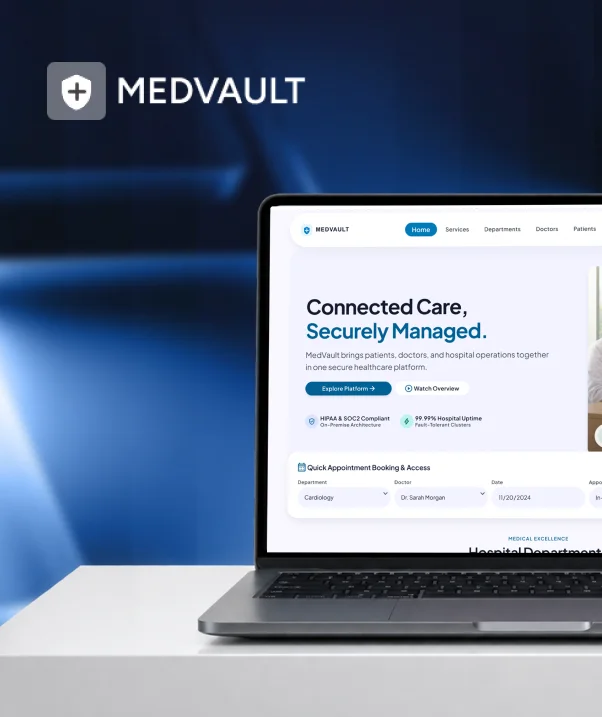
MedVault is a self-hosted healthcare management platform designed to keep sensitive patient records, treatment histories, diagnostic images, and operational data within the institution's own infrastructure. It brings appointment scheduling, electronic medical records (EMR), bed management, pharmacy inventory, billing, and patient communication into one connected system. Built for hospitals and clinics where privacy, availability, and operational control are critical, MedVault minimizes reliance on external services for core clinical workflows. With local data storage, role-based access, encrypted backups, and on-premise deployment, the platform remains operational even when internet connectivity is unavailable.
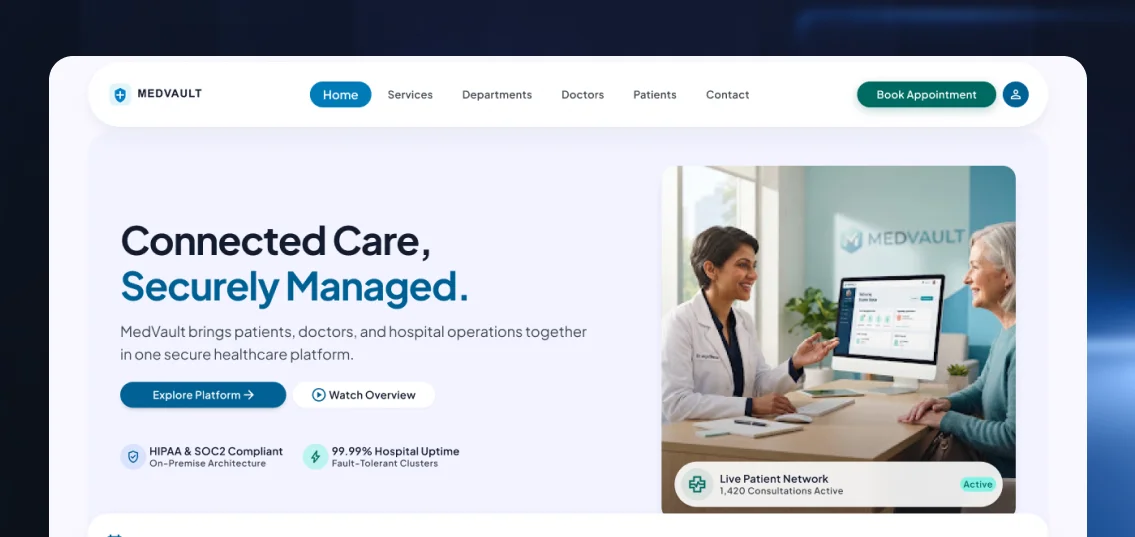
Keep Critical Care Data Where It Belongs
Challenges
Healthcare facilities need to coordinate highly sensitive information across doctors, nurses, reception staff, administrative networks, and support teams while maintaining strict access controls. Medvault helps address several operational challenges:
- Complex appointment scheduling: Allocating outpatient slots across 30+ doctors, shared procedure rooms, and specialized equipment while accounting for shifts, equipment availability, and clinical constraints.
- High-Volume clinical records: Managing structured medical records, prescriptions, refills with drug interaction checks, diagnostic images, consent forms, and historical documents within a centralized system.
- Real-time hospital operations: Keeping bed occupancy, admissions, discharges, and nursing workflows synchronized across departments.
- Data privacy and access control: Ensuring each user sees only the information relevant to their role, from hospital administrators to patients and guardians.
- Internet-independent operation: Keeping core clinical workflows available without depending on cloud connectivity or external data processing services.
Our Approach
MedVault uses an on-premise architecture with a rule-driven scheduling engine and real-time hospital workflows.
- Constraint-Based Scheduling: A hybrid genetic algorithm runs as an asynchronous Laravel job to generate optimized schedules while considering doctor shifts, procedure rooms, equipment requirements, calibration windows, and infection-control buffers.
- Queue-Based Processing: Redis and Laravel queues handle resource-intensive scheduling tasks without blocking the main application, while live progress updates provide visibility into schedule generation.
- Version-Controlled Scheduling: Generated timetables are versioned, while manual changes trigger re-validation of affected slots to prevent scheduling conflicts.
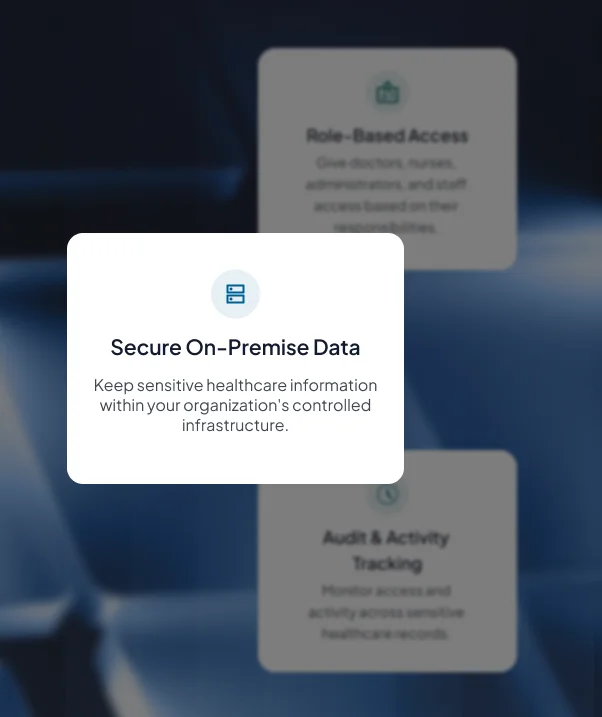
- Local-First Data Storage: Patient records, uploaded documents, and diagnostic images remain on institution-controlled infrastructure, with encrypted backups supporting data recovery without moving core PHI to external cloud storage.
Development & Framework
- Frontend: React, HTML/CSS, Tailwind, Ant Design, FullCalendar for appointments and resource scheduling, Chart.js and Recharts for clinical dashboards.
- Backend: Laravel 10, PHP 8.1, Redis, Laravel Echo + Pusher for real-time live tracker updates.
- Database: PostgreSQL for structured EMR records.
- Authentication: Laravel Sanctum, Multi-factor authentication (MFA), Role-based access control (Doctor, Nurse, Reception, Super Admin, Hospital, Manager, Doctor, Patient, Pharmacist, Patient Guardian).
- Storage & Documents: Local disk storage, public/private filesystem, for clinical documents and diagnostic images. DomPDF for discharge summaries and medical documents. Laravel OCP for digitizing handwritten prescriptions and legacy records.
Key Features
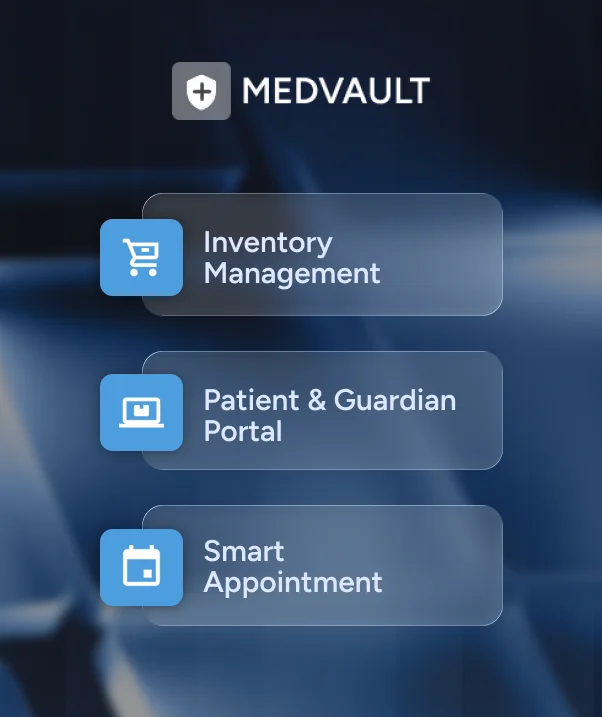
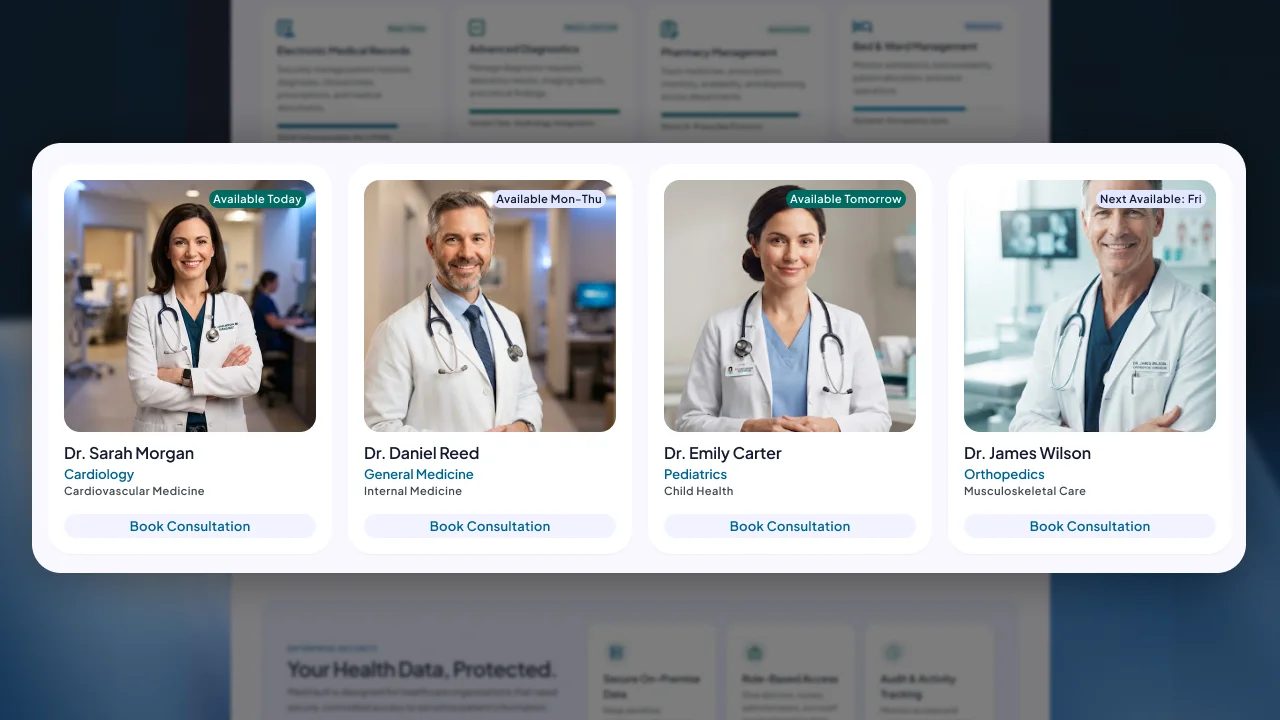
Smart Appointment Scheduler
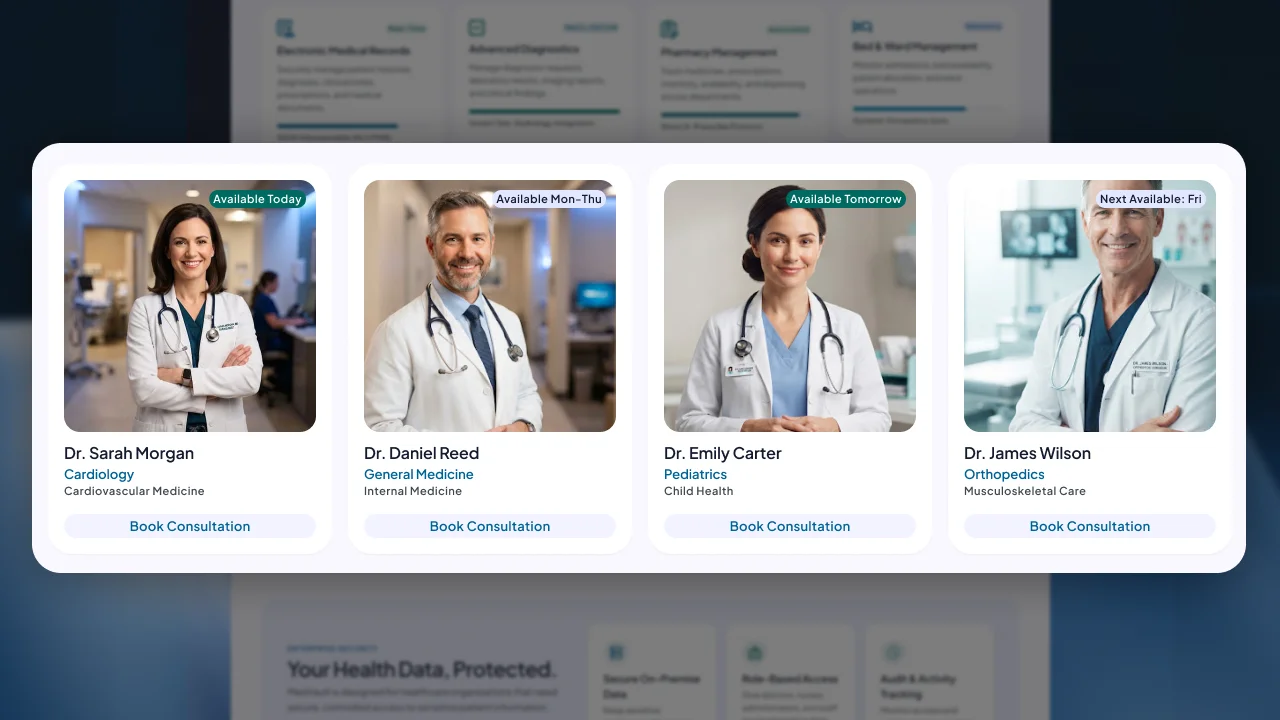
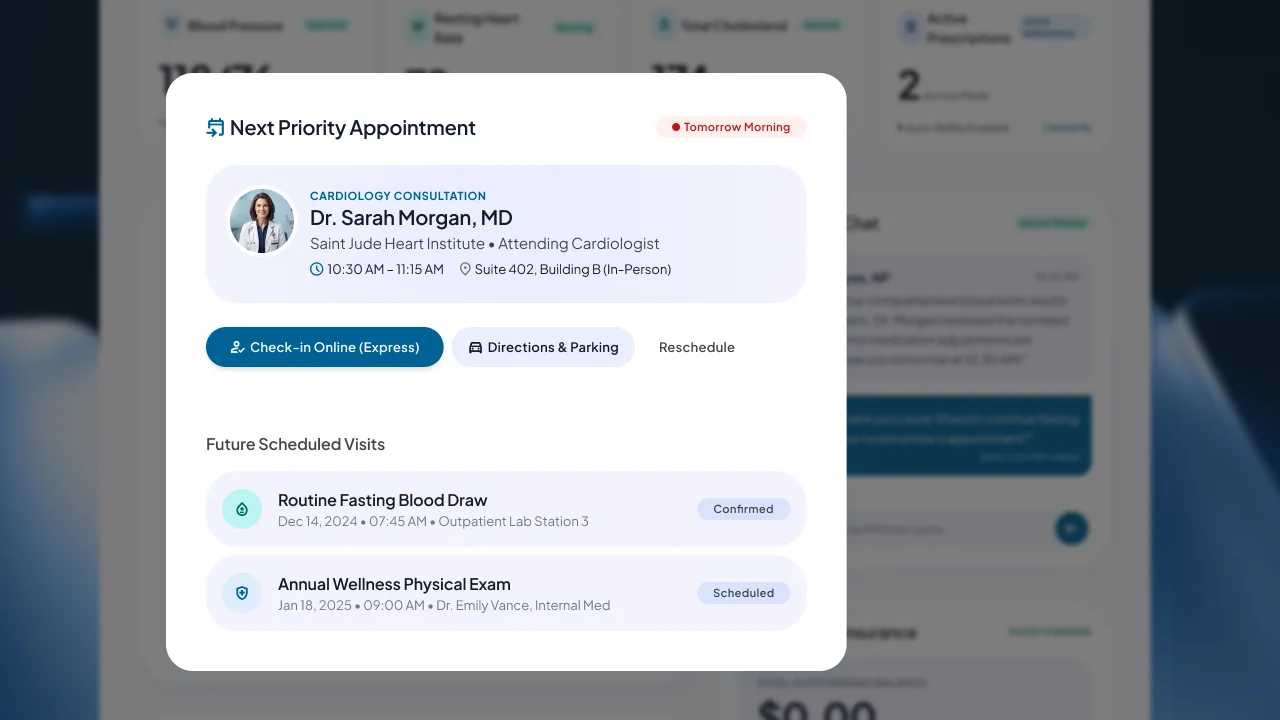
Constraint-based scheduling considers doctor availability, specialization, rooms, equipment, and patient preferences. The system supports recurring appointments, emergency walk-ins, waitlists, and automated slot backfilling.
Comprehensive EMR & Diagnostics
Doctors can manage structured SOAP notes, prescriptions, treatment histories, and diagnostic records from a centralized interface. Clinical documents and diagnostic images can be accessed according to user permissions.
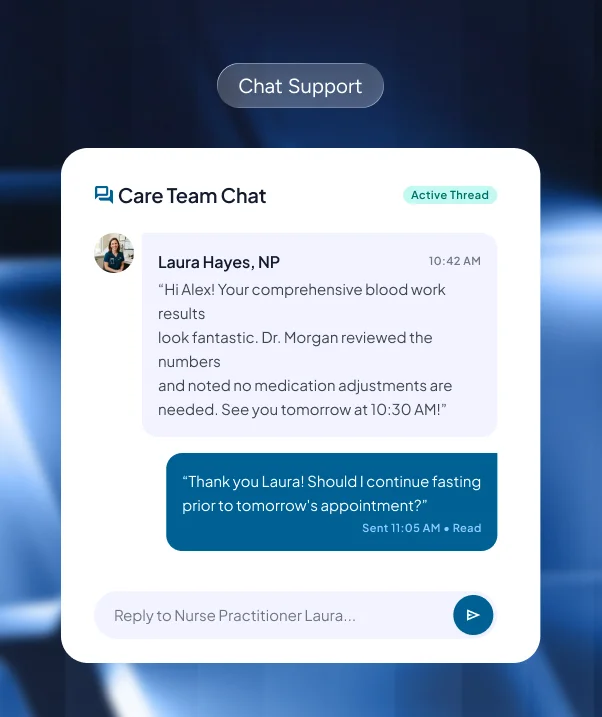
Patient & Guardian Portal
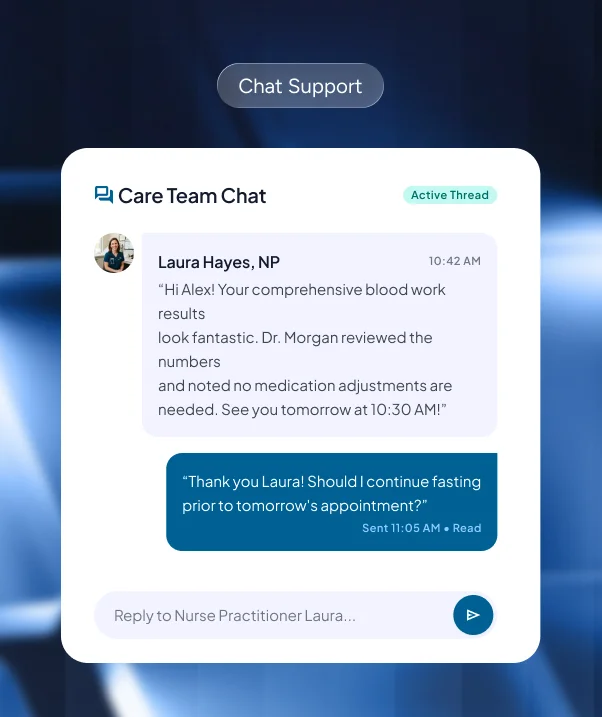
Patients can view appointments, communicate securely with care teams, access consent documents, and receive appointment reminders. Guardian access is limited to authorized dependent records.
Bed & Ward Automation
A real-time occupancy dashboard gives hospital staff visibility into available, occupied, reserved, and transitioning beds. Admission, discharge, and nursing handover workflows are connected within the same system.
Pharmacy & Inventory Management
Track medicines and clinical supplies, monitor stock levels, and connect inventory activity with hospital operations to improve visibility into available resources and replenishment need
On-Premise First
Core patient and operational data is stored on hospital-controlled infrastructure. Local storage, encrypted backups, and independent clinical workflows reduce dependency on external connectivity.
Branding & Visuals
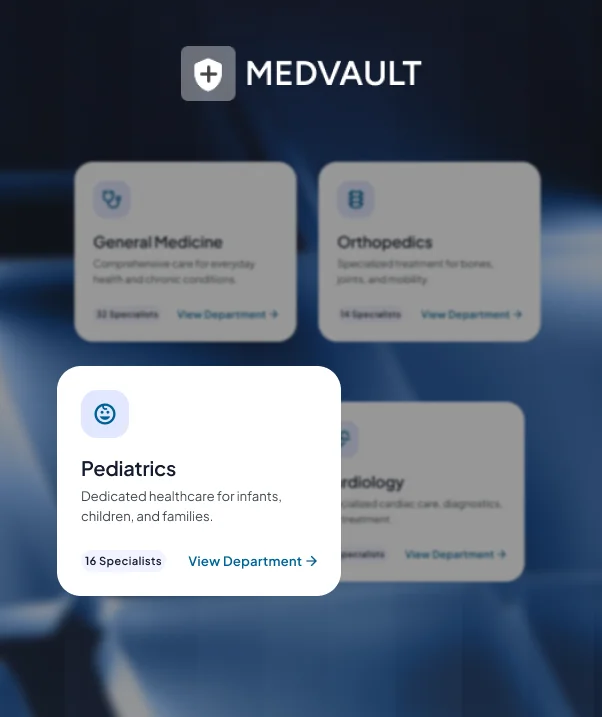
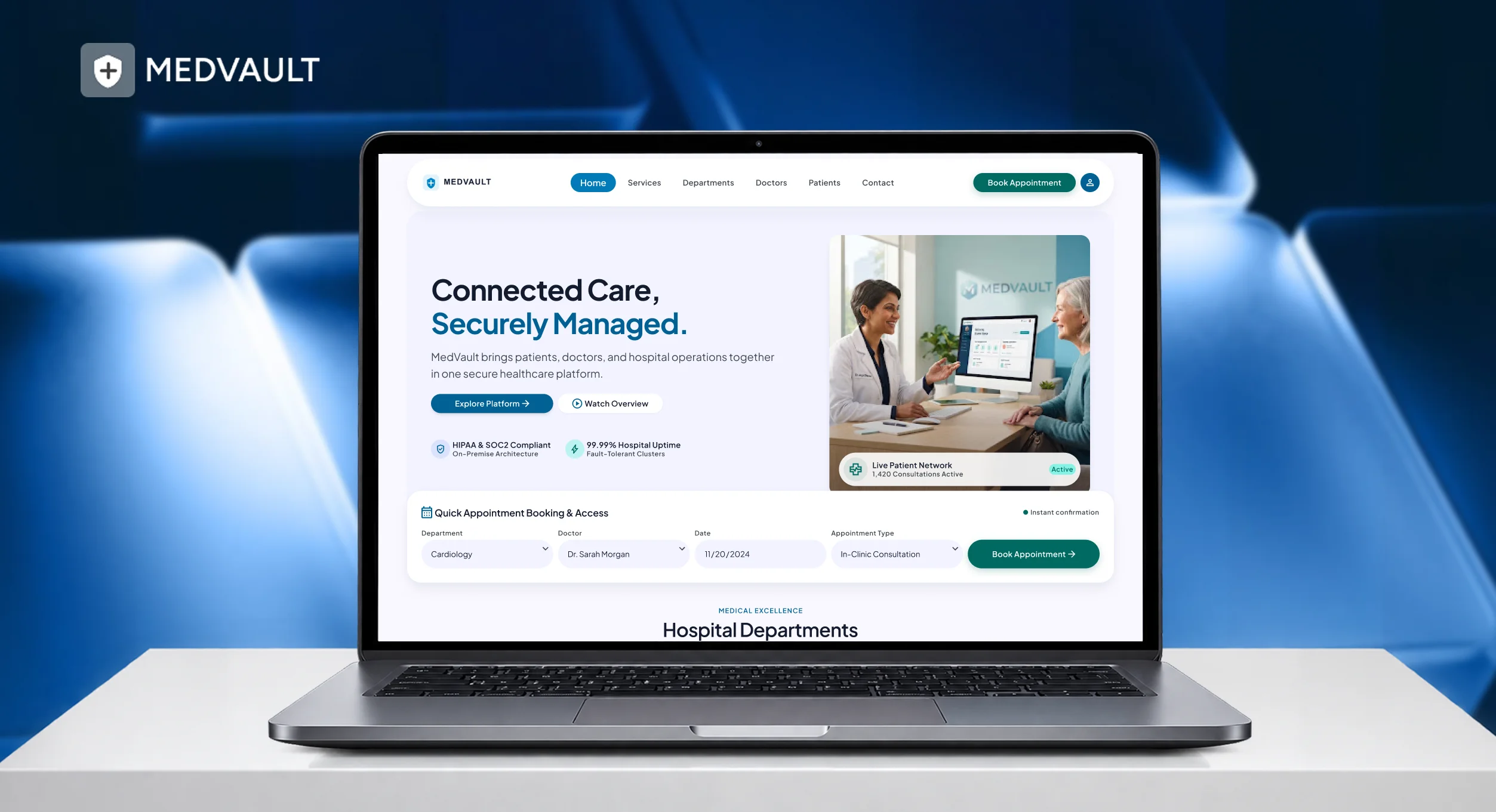
The visual direction is designed around trust, clarity, and clinical efficiency.
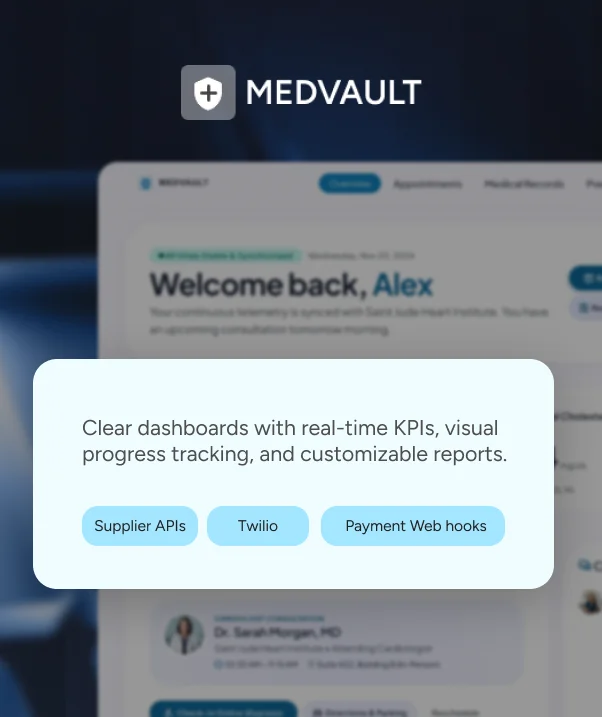
- Clean dashboards with clear information hierarchy
- High-contrast status indicators for beds, appointments, and alerts
- Calendar-based scheduling interfaces for complex resource allocation
- Structured clinical record layouts for quick scanning
- Data visualizations for occupancy, appointments, and operational metrics
- Minimal visual distractions to support fast decision-making in clinical environments
- Consistent icons and labels across administrative and clinical workflows

Results
Medvault brings critical hospital workflows into a single, institution-controlled platform, connecting scheduling, EMRs, diagnostics, beds, pharmacy inventory, billing, and patient communication while keeping core healthcare data on-premise. The result is a practical healthcare management system designed around privacy, operational continuity, controlled access, and reliable clinical workflows, giving institutions greater control over sensitive data without sacrificing the usability of a modern hospital management platform.